Introduction
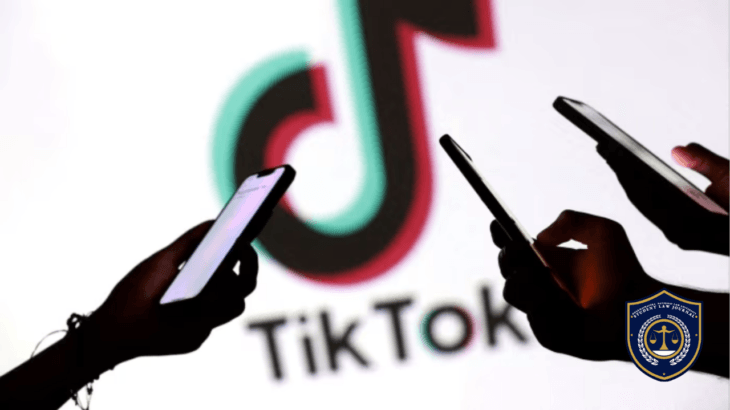
A registered trade mark enjoys protection from infringement in the classes under which it is registered, however, inclusion as a well-known trade mark grants it an elevated level of protection, shielding it from infringement even across unrelated classes of goods or services. In a landmark ruling, the Bombay High Court in the case of TikTok Limited v. The Registrar of Trade Marks Mumbai & Anr. dismissed the petition filed by the TikTok Limited. It upheld the order passed by the Assistant Registrar of Trade Marks in an application filed under Rule 124 of the Trade Marks Rules, 2017 for inclusion of the trade mark TikTok in the list of well-known marks. The decision is particularly noteworthy because of the Court’s reliance on the fact that the TikTok application has been banned in India since 2020, while rejecting the claim for well-known status. The author seeks to critique this judgment in the present case comment and explore the larger implications this decision may have on brand protection.
Background of the Case
An application was filed by TikTok Limited (hereinafter “the petitioner”) under Rule 124 of the Trade Marks Rules, 2017 for determination of its mark TikTok as well-known. Before the Bombay High Court, the petitioner challenged the order of the Assistant Registrar of Trade Marks (hereinafter “the Respondent”) by which it refused to include the petitioner’s registered mark TikTok in the list of well-known marks. The main reasoning behind the impugned order was that TikTok stood banned in India as it was found against the “sovereignty and integrity” of India. However, the petitioner argued that mere banning in India could not be the basis for refusing the application. The petitioner, further, argued that the statutory provisions including the Trade Marks Act, 1999 and the Trade Mark Rules, 2017 were not properly taken into consideration and the impugned order was liable to be set aside due to non-application of mind.
Ruling of the High Court
With respect to the objection raised by the petitioner that the Respondent in its order had failed to refer to Section 11 and instead referred to Section 9, the Court held that the same in itself could not prove to be a ground to set aside the impugned order. Further, the Court examined the nature of Section 11 of the Trade Marks Act, 1999 and held that the factors included in Section 11(6) are non-exhaustive. It noted that Section 11(6) itself provides that while determining an application for a well-known trade mark, “any fact which he considers relevant for determining a trade mark as a well-known trade mark” may be considered by the Registry which leads to the interpretation that the factors under Section 11(6) to be illustrative in nature and not exhaustive.
The Court observed that the application bearing the mark TikTok has been banned in India pertaining to the concerns related to the sovereignty, integrity, defence and public order of the country which could not be ignored. With this interpretation, the Court held that it was a relevant factor to be considered that the application, TikTok, was banned by the Government of India under the provisions of the Information Technology Act and is covered under Section 11(6) of the Trade Marks Act, 1999. Therefore, in the present case, the Bombay High Court upheld the impugned order of the Respondent and dismissed the petitioner’s plea based on the fact that the application bearing the mark has been banned due to user data privacy and national security concerns.
Statutory Provisions Related to the Well-Known Trade marks in India
The Trade Marks Act, 1999 (hereinafter “the Act”) defines a well-known trade mark under Section 2(1)(zg) as a mark which if used in relation to other goods or services would be confused by “substantial segment of the public” to be connected to the person using the mark for first-mentioned goods or services. Further, as per Rule 124 of the Trade Marks Rules, 2017, Sections 11(6) to 11(9) of the Act which set out various factors that need to be taken into consideration while determining an application for granting the status of well-known trade mark.
Notably, Section 29(4) of the Act also recognises the doctrine of “trade mark dilution” with respect to the well-known trade marks. This Section provides that if a mark is identical/similar to the registered trade mark and used for non-similar goods/services and the registered trade mark has a “reputation in India”, then in such cases, if such use takes unfair advantage or is detrimental to the distinctive character or reputation of the registered mark, it will be a case of infringement. Therefore, a well-known trade mark under the statute enjoys an elevated protection against similar and identical marks even across unregistered classes of goods and services.
The Current Judgment: Reasoned Enough to Deny Well-Known Status to TikTok?
Even when the concept of well-known trademarks was not statutorily recognised in India, the foreign marks that had trans-border reputation in India were granted protection against unfair use of their marks. In a very initial landmark case of Kamal Trading Co. v. Gillette UK Limited, the blades bearing the claimant’s mark “7 o’ clock” were not available in India after the year 1958, however, the Bombay High Court recognised that “goodwill or the reputation does not extinguish merely because the goods are not available in the country for some duration.” Moreover, in the popularly known Whirlpool Case, the Single Judge at Delhi High Court recognised that even the advertisement of a trademark amounts to use even if there is no actual existence of the product in the market. The decision was ultimately upheld by the Supreme Court when an appeal was preferred.
Following the decision in Kamal Trading Case, in the noteworthy case of Playboy Enterprises, Inc. v. Bharat Malik & Anr., the Delhi High Court protected the rights of the claimant’s trademark “Playboy” used in relation to adult magazines which were otherwise banned in India, as similar to the present case. It held that “suspension of business activities in a country for short duration due to legal ban or import restrictions, does not destroy the reputation or goodwill already acquired.” Moreover, the Supreme Court in Toyota Jidosha Kabushiki Kaisha v. Prius Auto Industries Ltd & Ors. noted that the necessary goodwill and reputation of the foreign brand needs to be proved in the Indian market at the relevant point of time.
The Bombay High Court in the present case put no reliance on any precedent in reaching its decision, however, interpreted the provisions under Section 11 of the Act, from sub-section (6) to (9) which provide for the factors that need to be considered by the Trade Marks Registry while determining the well-known trade mark. The Court rightly held the factors under Section 11(6) of the Act to be “non-exhaustive” because it uses the phrase “any fact” in its language, however, failed to consider and balance the same against clause (i) of Section 11(9) which was emphasised by the petitioner. As per Section 11(9)(i), the fact that whether a mark has been put to use in India or not shall not be a pre-condition to determine the well-known trade mark status. In the precedents analysed above, the Indian Courts have consistently taken the view that the actual existence of goods or services in the market is not necessary to prove transborder reputation in India and the same cannot be a relevant factor to decide the well-known status of a mark. In the present case, how a ban which eventually leads to non-use of an application in India could be considered relevant has not been addressed to by the Court adequately, and merely relied on the exhaustive nature of Section 11(6) to include the legal ban as one of the relevant factors.
Further, if Section 11(6) of the Act is read with Rule 124 of the Trade Marks Rules, 2017 in light of the definition of a well-known trade mark under Section 2(1)(zg), it cannot lead to an inference where a legal ban could be said to be a relevant factor to determine whether a trade mark is well-known. Drawing parallel from the judgment in Playboy case where a similar situation arose as the magazines bearing the impugned mark were legally banned in India, this factor was considered immaterial to decide reputation in the Indian market.
Moreover, drawing from the Courts’ view in the Kamal Trading case and Prius case, the well-known status is essentially concerned with the “reputation” enjoyed by the mark in Indian market, and it does not extinguish merely because of the ban which leads to non-availability of the goods/services in the country for some duration. In the author’s view, it was rightly argued by the petitioner that ban on TikTok is only a “transient situation”, the same could not be regarded as a relevant factor. In the present case, the Court should have also taken into consideration the crucial fact that the application bearing the mark TikTok was extensively used in India before being banned in 2020, and had already acquired a reputation in India among substantial segments of the relevant public, i.e., social media users.
Conclusion
This case presented a compelling instance before the High Court where it was tasked with balancing the individual rights of a trade mark holder against the security and integrity of the nation. While upholding the latter, the Court made a departure from previous precedents, arguably justified in light of the national ban on the application. But at the same time, it raises critical questions as to whether a national ban in itself can be a relevant factor to refuse the status of well-known trade mark despite the mark having acquired a reputation in the Indian market which is the sine qua non for the grant of such status.
In author’s view, a more nuanced reasoning may have been provided by the Court to balance the provisions of Section 11(6) which has been interpreted as being “non-exhaustive” against Section 11(9)(i) which does not require use of the mark as a pre-condition, particularly, in light of a national ban. As highlighted above, the Court also failed to refer to any precedent to draw a parallel or distinguish the present case. As a result of this, this ruling potentially exposes the brand like TikTok to trademark dilution, as it would be unable to claim protection against infringement across classes under which it has not registered its trade mark, which is a protection given to the well-known marks. Ultimately, while the judgment underscores the precedence of national interest, it will likely influence how such foreign brands entities navigate their intellectual property rights in India. \
This article is a part of the DNLU-SLJ (Online) series, for submissions click here.

Student, National Law Institute University, Bhopal